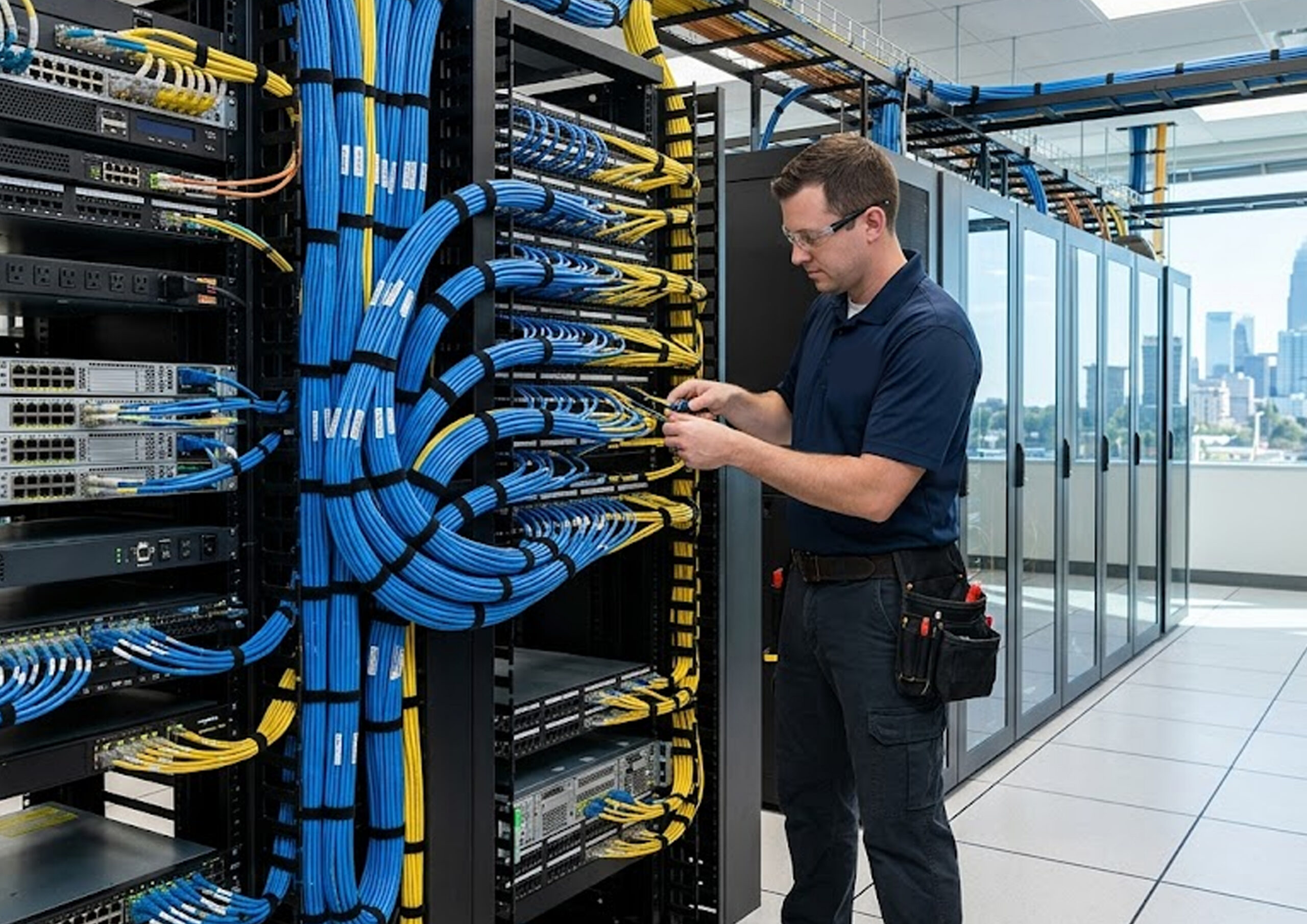
Structured cabling for copper and fiber, built to standard
A clean, certified cabling plant supports every system on your network. We design, install, terminate, test and label copper and fiber infrastructure that performs today and scales tomorrow.
- Code-aware installation
- Documented closeout
- One accountable team
At a glance
- Cat6 and Cat6A copper, plus fiber backbone
- Single-mode and multimode fiber (OS2, OM3, OM4)
- Fusion splicing and connectorization
- Certification test results for every link
Reliable performance
Certified links and clean terminations eliminate a major cause of intermittent network problems.
Ready for what’s next
Cat6A and fiber backbones support faster speeds, PoE devices and future Wi-Fi.
Easy to manage
Consistent labeling and documentation make moves, adds and changes simple.
A closer look at Structured Cabling (Copper and Fiber)
Cabling outlives almost every device connected to it, so shortcuts show up later as intermittent faults and costly rework. We install to ANSI/TIA standards with certified testing, so you know every run meets spec.
From tenant improvements and office moves to campus backbones and warehouse build-outs, we handle pathways, cable, termination, firestopping and documentation under one scope.
Industries we support
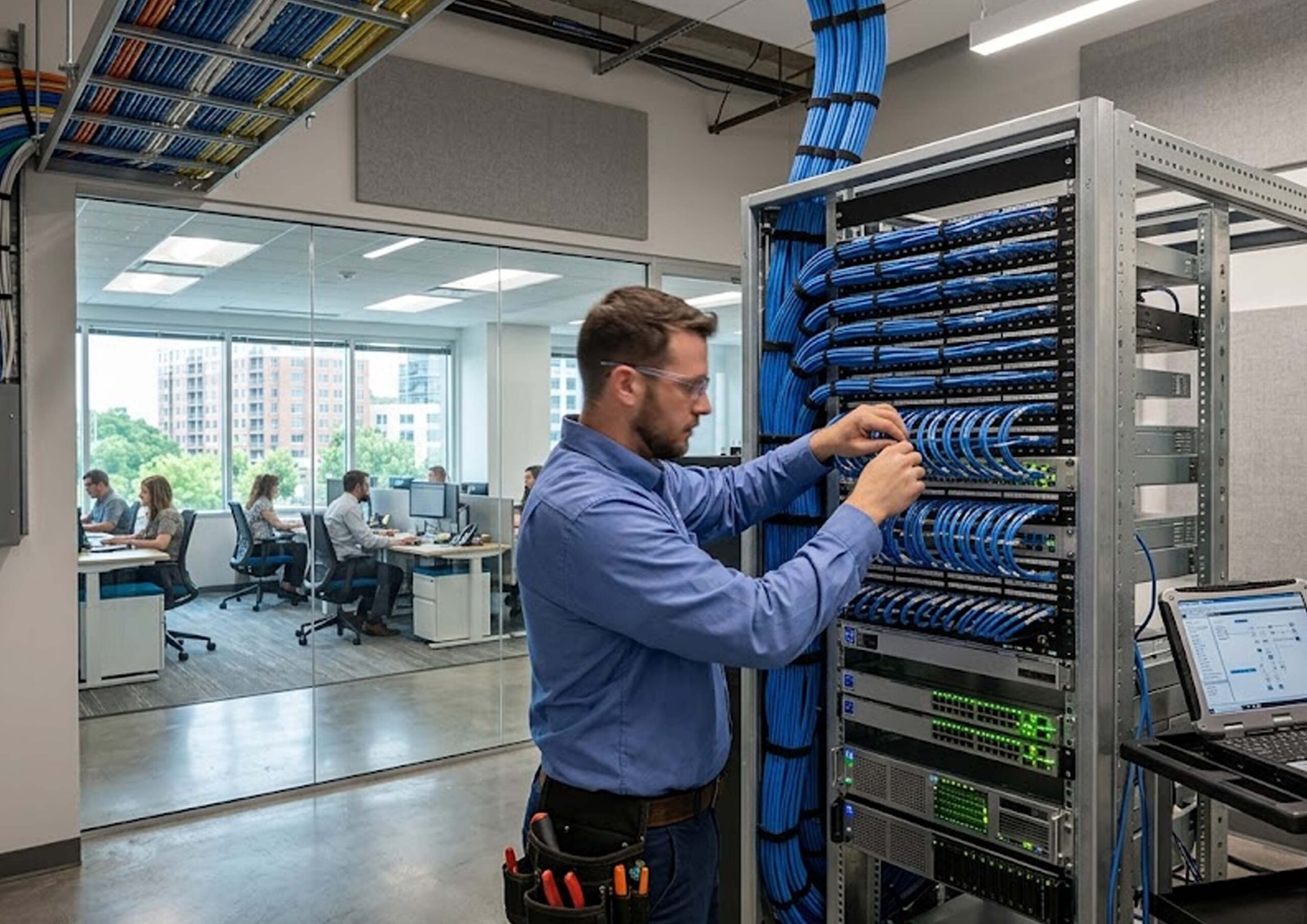
Best suited for
- Businesses moving into or renovating office space
- Warehouses and plants needing reliable network and Wi-Fi coverage
- Campuses and multi-building sites that need fiber links
- Teams cleaning up legacy or undocumented cabling
Capabilities built around your environment
Horizontal copper cabling
Cat6 and Cat6A runs to desks, wireless access points, cameras and devices, terminated at jacks and patch panels.
Fiber backbone and campus links
Indoor and outdoor fiber between floors, buildings and rooms, with splicing and enclosures.
Pathways and support
J-hooks, cable tray and conduit coordination, with proper bend radius and separation from power.
Racks and patching
Rack and panel layouts, cable management and clean patching that makes changes simple.
Testing and certification
Copper and fiber tested with certification equipment, with results delivered for each link.
Remediation and cleanup
Abandoned cable removal, re-termination and re-labeling for messy or undocumented plants.
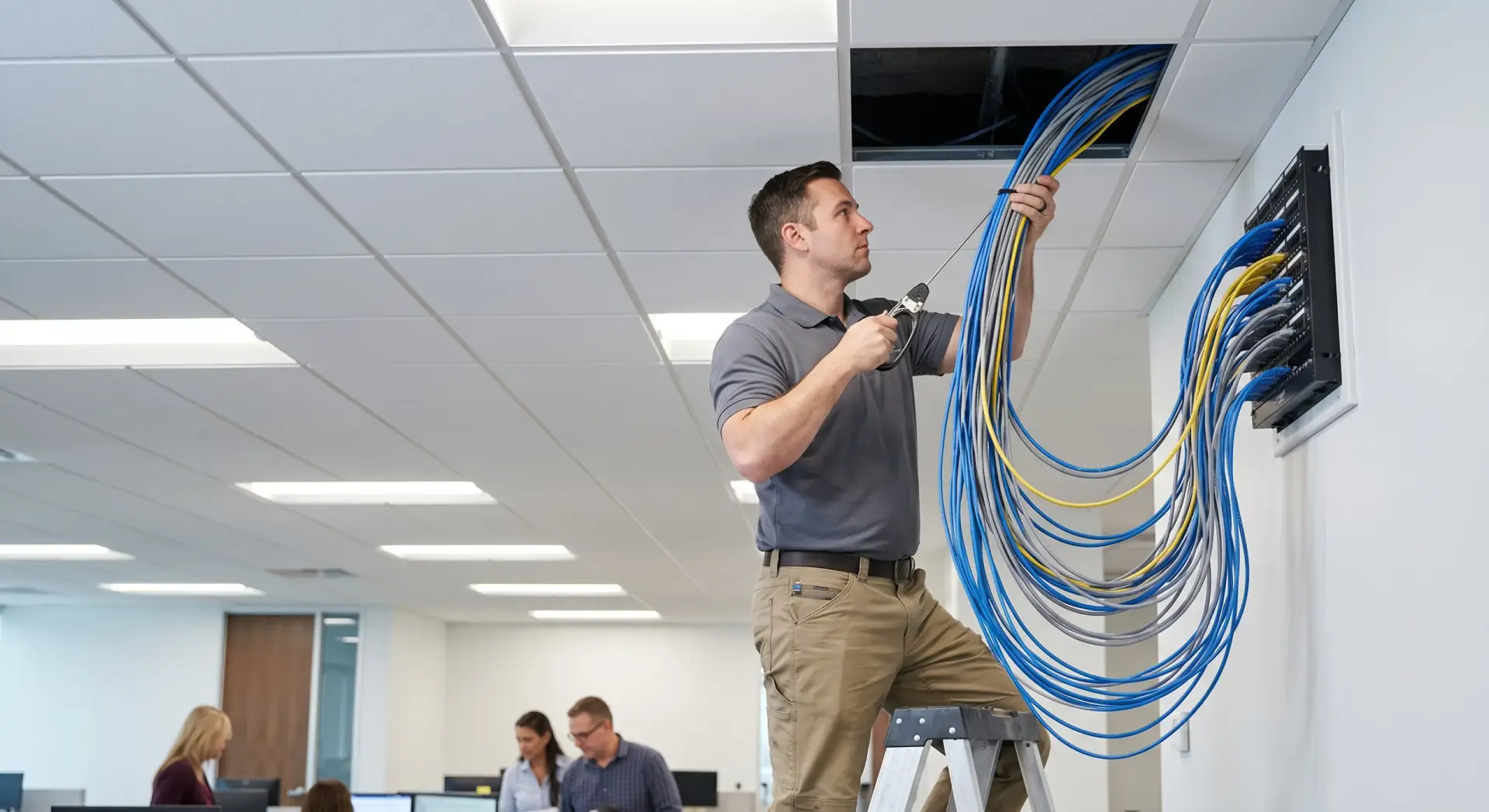
Where clients usually start
Tenant improvement cabling
Cable a new or remodeled office, from the IDF to desks and ceiling access point locations.
Campus fiber backbone
Install and splice indoor and outdoor fiber between buildings, with tested links and clear labeling.
Cabling cleanup and re-label
Remove abandoned cable, re-terminate, patch and label an old plant so it’s manageable again.
Clear scope, no surprises
What we handle, and what we need from you to keep the project moving.
What is included
- Site walk and cabling design
- Cable, connectors, jacks, patch panels and racks
- Plenum or riser-rated cable as required
- Firestopping of penetrations
- Copper certification and fiber loss/OTDR testing
- Permanent labeling per ANSI/TIA-606
- As-built floor plans and test reports
What we need from you
- Floor plans, outlet counts and equipment locations
- Access to ceilings, risers and telecom rooms
- Building and landlord requirements, including after-hours rules
- Rack space and power in the telecom room
What you receive at closeout
- Labeled outlets and patch panels
- Copper certification and fiber test reports
- As-built floor plans
- Rack elevations
- Closeout and punch-list sign-off
From first call to completed work
- 1
Survey
We inspect pathways, rooms and ceiling conditions, then agree outlet counts, cable types and routes.
- 2
Plan
You receive drawings, a materials list and a schedule that fits your operating hours.
- 3
Install
Pull, terminate and dress cable, install racks and panels, and firestop penetrations.
- 4
Test
Certify each link and resolve any failures before handoff.
- 5
Document
Deliver labeled outlets, test reports and as-built drawings.
Local requirements, handled
California adds its own codes, licensing and compliance expectations. We plan for them from day one.
Contractor licensing
California requires low-voltage cabling to be installed by a properly licensed contractor (CSLB C-7 Low Voltage Systems classification); we plan projects accordingly.
Electrical and fire codes
Cable types and methods follow the California Electrical Code, local amendments and fire marshal requirements, including firestopping.
Seismic considerations
Pathways, racks and overhead supports are planned with building seismic requirements in mind.
Landlord and building rules
We coordinate access, insurance certificates and working hours with property managers.
Standards and references
Talk to a Structured Cabling (Copper and Fiber) specialist
Tell us about your locations, timeline and goals. We’ll follow up with next steps and a scoped proposal.
- We review your request and any site details.
- We schedule a call or site visit.
- You receive a clear scope, timeline and price.